

Reading Time: 12–15 minutes
When people think of traveling to France, Paris is almost an automatic choice. The Louvre, the Eiffel Tower, the Musée d’Orsay, the Champs-Élysées—Paris represents one of the most concentrated urban cultural experiences in the world. Its museums, architecture, fashion, cafés, and historical depth are unmatched.
Yet this intensity comes at a cost. Paris travel often means tightly packed schedules, long queues, scattered attractions, and a constant sense of rushing from one “must-see” to another. You may see a great deal, but rarely do you slow down enough to feel truly present.
Once travel is no longer about “your first time in France,” and instead about quality of experience, emotional return, and rhythm, another part of France begins to make far more sense: Haute-Savoie.
This is not about replacing Paris. It is about choosing a different travel philosophy.
From Sightseeing to Living Inside the Landscape
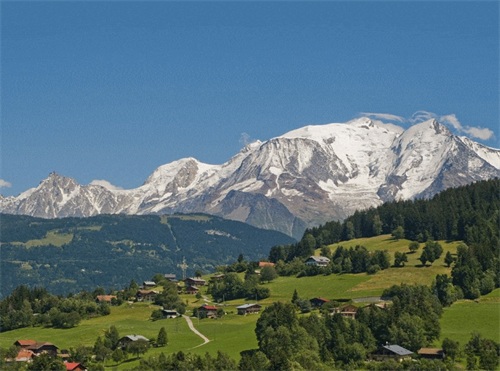
Paris impresses through cultural density. Haute-Savoie, located in eastern France near the borders of Switzerland and Italy, offers something fundamentally different: a seamless blend of nature and human life, where scenery is not a backdrop but the core of daily existence.
Here, travel shifts from “checking landmarks off a list” to stepping directly into a fully composed landscape. In a single day, you can experience transitions that would be impossible in a major city—standing beneath Mont Blanc in the morning, boating through Annecy’s canals in the afternoon, and wandering medieval streets the following day.
This continuity between natural grandeur and human-scale towns is something urban destinations simply cannot replicate.
Mont Blanc and the Alpine Context
The Alps stretch across Europe in a vast arc, beginning in southeastern France and extending through Switzerland, Liechtenstein, northern Italy, southern Germany, and into Austria. Mountain ranges such as Bavaria’s Alps and Italy’s Dolomites are all part of this system.
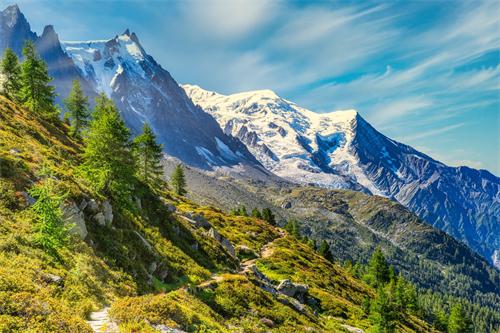
Within France, however, the most iconic peak is undoubtedly Mont Blanc, the highest mountain in Western Europe. Located at the border of France, Switzerland, and Italy, Mont Blanc’s French face lies within the Mont-Blanc region of Haute-Savoie, giving the area its exceptional geographic importance.
Chamonix: At the Foot of Europe’s Highest Peak
Nestled directly beneath Mont Blanc, Chamonix is one of the world’s most famous alpine towns. Historically, it has served as the base for Mont Blanc expeditions; today, it is a global center for outdoor sports.
Summer: Peaks and Glaciers
The Aiguille du Midi cable car transports visitors to an altitude of 3,842 meters, making it one of the world’s largest vertical-drop cable systems. On clear mornings, the panoramic views of the Alps are extraordinary. Reservations are essential, and morning visits are strongly recommended.
The Montenvers railway takes travelers deep into the mountains to the Mer de Glace glacier. Visitors can walk through ice tunnels and observe the glacier up close—an experience far removed from conventional city travel.
Winter: A World-Class Ski Destination
In winter, Chamonix transforms into a premier skiing and alpine sports hub, best enjoyed with a stay of three to five days or longer.
Practical Considerations
Mountain weather is highly unpredictable. Windproof and warm clothing is essential year-round. During peak seasons, accommodations, cable cars, and activities should be booked well in advance. First-time visitors to high altitudes should pace themselves, stay hydrated, and avoid intense exertion.
For those with limited time, day trips from Geneva are well organized. With more flexibility, summer stays of two to three days allow for a deeper experience.
Annecy: The “Venice of the Alps”
If Chamonix represents the power of the Alps, Annecy embodies their gentler side.
Lake Annecy is widely regarded as one of the cleanest lakes in Europe, its water shimmering in shades of blue and turquoise. Visitors can rent pedal boats or paddleboards, or simply relax on the Pont des Amours (Lovers’ Bridge), watching the lake merge with distant mountains.
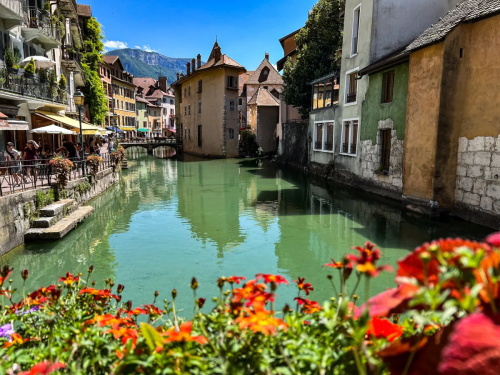
The old town’s canal district is Annecy’s heart. Colorful houses, flower-filled balconies, and slow-moving waterways have earned it the nickname “the Venice of the Alps.” The Palais de l’Île is the town’s most photographed historic building, while the Annecy Castle Museum above offers sweeping views of the city (entry approximately €5.5).
With extra time, a short drive to Semnoz Mountain—about 30 minutes away—rewards visitors with sunset views over both Lake Annecy and Mont Blanc on clear days.
Annecy’s markets, typically held on Tuesdays, Fridays, and Sundays, are ideal places to sample Savoy cheeses, fresh berries, and local produce—an authentic window into regional life.
Recommended stay: two days
Yvoire: Flowers, Stone, and Medieval Memory
Located on the shores of Lake Geneva (Lac Léman), Yvoire sits at the eastern edge of Haute-Savoie, facing Switzerland. Geneva is just 45 kilometers away, and from Nyon, Switzerland, the village can be reached by boat in about 20 minutes.
Yvoire is small—only 3.12 square kilometers, with fewer than 800 permanent residents. You can walk around it in half an hour. Yet it is internationally known as one of France’s most beautiful “flower villages.”
Geraniums, roses, hyacinths, and orchids spill from windows, balconies, and stone walls. Wooden balconies, climbing wisteria, and narrow cobbled lanes create a setting that feels almost painterly. Each home’s floral design is unique, which has earned Yvoire the nickname “the Pearl of Lake Geneva.”
Historically, Yvoire was a strategic military site. In the 14th century, Count Amadeus V of Savoy ordered the construction of fortified walls and a castle. Much of this medieval structure remains today, including the ramparts and the Geneva Gate. The Duke of Yvoire’s castle, built in 1306, still houses descendants of the original family and is not open to the public.
The village’s centerpiece is the Garden of Five Senses, a botanical maze featuring over 1,300 plant species. Visitors engage with the garden through sight, sound, smell, touch, and taste, often interacting directly with the gardeners themselves.
Beyond the Highlights: Samoëns and Évian-les-Bains
Haute-Savoie is also dotted with lesser-known towns that reward unhurried exploration.
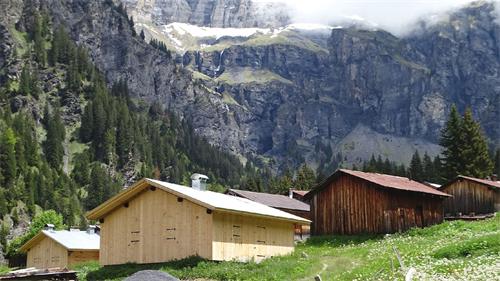
Samoëns, often called the “town of stone,” is officially listed among Les Plus Beaux Villages de France. Its stone chalets, flower-lined streets, and low visitor numbers preserve a deeply authentic Alpine atmosphere.
Évian-les-Bains, set along Lake Geneva, is known for its mineral water and spa culture. Visitors can see the Cachat Spring, stroll along elegant lakeside promenades, or enjoy thermal baths. Arriving by boat from Geneva offers the most scenic approach.
Costs: What Your Budget Buys Here
Compared to Paris, Haute-Savoie offers significantly greater flexibility in travel costs.
Accommodation prices vary widely by season. The regional average is around €130 per night, but peak ski season—especially February—can see prices double or triple. In the off-season, budget hotels and guesthouses can start from €45–€85, while lakeside or ski-in/ski-out hotels in Annecy or Chamonix can range from €200–€400 or more.
Dining is more affordable than in Paris. Traditional restaurants typically cost €25–€40 per person, with Savoy specialties such as cheese fondue averaging €25–€35. Fixed-price lunch menus offer excellent value, and supermarket picnics by the lake or in the mountains are both economical and atmospheric.
Major alpine activities—such as the Aiguille du Midi cable car or Montenvers railway—usually cost €30–€70. Ski passes average €40–€60 per day, equipment rentals €20–€40, and guided canyoning adventures start around €45 per person.
Transportation and Best Travel Seasons
Geneva International Airport is the most convenient gateway to Haute-Savoie. From within Europe, high-speed TGV trains connect Paris, Lyon, and Milan to Annecy with ease.
For travelers planning to explore multiple villages and mountain areas, renting a car offers maximum flexibility. Those focusing on Annecy and nearby towns can rely on trains and regional buses, though schedules should be checked in advance.

Best times to visit
- Winter (December–April): skiing and snow sports
- Summer (June–September): hiking, cycling, and water activities
- Spring and autumn: fewer crowds and ideal for slow village travel
Why Skipping Paris Can Make Sense
Choosing not to visit Paris is not a rejection of its value. It is simply an acknowledgment that not every journey needs maximum cultural intensity.
Haute-Savoie offers something increasingly rare: balance. A slower pace, a deeper connection to place, and the freedom to experience moments rather than rush through landmarks.
If you are looking for a French journey that feels less performative and more lived-in, Haute-Savoie may well be the better choice—at least for this chapter of your travels.
References
- Annecy Tourism Office. Lake Annecy and the Old Town.
- Chamonix-Mont-Blanc Tourism. Aiguille du Midi cable car and Mont Blanc region.
- France.fr. (n.d.). Haute-Savoie: Alpine nature, lakes, and villages. Atout France – French Tourism Development Agency.
- Office de Tourisme d’Yvoire. (n.d.). Yvoire: Medieval village on Lake Geneva.
Costa Rican Rainforest
Eco-Lodge or Eco-Fraud? Investigating Sustainable Claims in the Costa Rican Rainforest
Costa Rica has long occupied a special place in the imagination of eco-minded travelers.
Gökçeada, Turkey
Turkey Beyond Istanbul: Coastal Towns Worth the Detour
Once you are ready to step away from the intensity of Istanbul—its crowds, traffic, and relentless sensory stimulation—Turkey reveals a quieter, more contemplative side.
“Cheap” Destinations?
Why Some “Cheap” Destinations End Up Costing More Than Expected
The main reason is the hidden costs that you never anticipated before arriving.
Castle Stay in Scotland
Castle Stay in Scotland: Worth the Splurge for a Once-in-a-Lifetime Experience?
Mist clinging to ancient stone walls, a solitary castle perched above a loch, a fire crackling in a wood-paneled hall while rain taps politely at the windows.