

Reading Time: 6–7 minutes
On the Croatian national flag, five historic coats of arms are displayed above the central checkerboard. Among them, the emblem featuring three crowned lion heads represents Dalmatia—the country’s most historic and economically influential coastal region. Stretching along the Adriatic Sea, Dalmatia accounts for the vast majority of Croatia’s coastline and has long been a crossroads of empires, trade, and cultures.
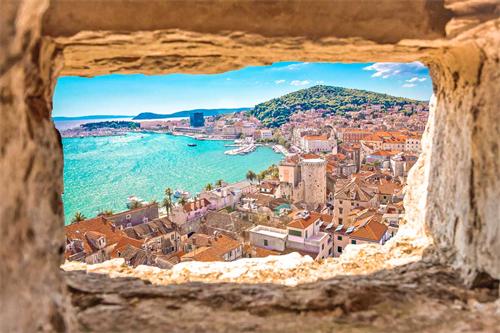
At the heart of Dalmatia lies Split, Croatia’s second-largest city. For centuries, it has been a strategic stronghold, a port, and a place where daily life unfolded against the backdrop of history. Today, Split is frequently described as a “Mediterranean gem,” a “Game of Thrones filming location,” and the ultimate base for island hopping. But behind the glossy reputation lies an important question:
Is Split truly worth the hype—or has it been overrated?
Why Split Is Called a “Jewel”: Its Irreplaceable Appeal
The soul of Split is undoubtedly Diocletian’s Palace—but calling it a “palace” or a “ruin” barely does it justice.
This is not a historical site that people simply visit and leave. For more than 1,700 years, people have lived inside it. Apartments, cafés, shops, laundries, and wine bars are woven directly into ancient Roman walls. History here is not preserved behind glass; it is actively inhabited.
You can sip coffee in a Roman basement in the morning, then sit in the Peristyle courtyard—featured in Game of Thrones—under the afternoon sun. This level of integration between ancient architecture and everyday life is rare anywhere in the world.
Official tourism studies have even labeled Split a top-tier “feel-good destination.” The reasons are tangible:
- Over 2,600 hours of sunshine per year
- Consistently good air quality
- Marjan Hill Forest Park, often called the city’s “green lung”
- A coastline that allows swimming, kayaking, and outdoor activities for most of the year
Split feels equally like a historic city and an outdoor lifestyle hub.
Equally important is its role as a transportation gateway. As Croatia’s second-largest port, Split offers exceptional flexibility. From here, you can easily reach islands like Hvar and Brač, join blue-cave excursions, or take short trips to Trogir or Krka National Park.
For travelers exploring the Balkans or the Mediterranean for the first time, Split delivers a near-perfect concentration of experiences: Roman history, medieval streets, Adriatic islands, local cuisine, and an outdoor-oriented way of life—all in one place.
The Cost of Popularity: Overtourism and Its Side Effects
That said, Split is not without its flaws.
During the high summer season (June to August), the Old Town and harbor can feel overwhelmingly crowded. Certain waterfront areas—especially some beach bars—have transformed into loud party zones, attracting visitors whose primary goal is nightlife rather than cultural exploration. This shift can disrupt the relaxed Mediterranean rhythm that once defined the city.
Another noticeable change is culinary. To cater to mass tourism, restaurants along the Riva promenade and in the busiest streets have become increasingly internationalized. Pizza, burgers, and generic menus dominate, while traditional Dalmatian konobas (local taverns) are becoming harder to find in prime locations. For travelers seeking authenticity, this homogenization can be disappointing.
As a popular destination, Split is also more expensive than inland Croatia—particularly for accommodation and dining in peak season. While prices are generally still lower than Dubrovnik, value for money drops significantly in midsummer. Some observers also note that certain municipal facilities feel outdated, and rising rents driven by tourism have affected local residents’ quality of life.
These issues, however, are hardly unique to Split—they are the familiar growing pains of many successful travel cities.
So, Is Split Overrated?
No—but it is often misunderstood.
Split’s core strengths are undeniable:
- A living UNESCO World Heritage Site
- Exceptional climate and coastal setting
- Unmatched convenience as a travel hub
These qualities are real, substantial, and well-earned.
However, if you visit only during peak summer, spend most of your time on the most commercial streets, and rush through the city as a quick stop, you may encounter a version of Split that feels tired, overcrowded, and over-marketed. In that case, disappointment is understandable.
The issue isn’t Split itself—it’s how and when you experience it.
A Practical Itinerary for Travelers with Limited Time and Budget
Best Time to Visit
The ideal months are May–June or September–October.
The weather is pleasant, crowds are thinner, and accommodation prices are noticeably lower than in July and August. In the shoulder season, you can find hostels and hotels ranging from €30 to €120 per night, depending on comfort level.
Where to Stay
Highly recommended areas include:
- Around Diocletian’s Palace
- Near the main bus station and ferry port
These locations allow you to walk almost everywhere, saving both time and transportation costs.
Day 1: Arrival and First Impressions
I arrived in Split in the afternoon. The airport shuttle bus takes about 30 minutes and costs around €8 one way. While local buses are cheaper, they are less convenient with large luggage, especially for first-time visitors.
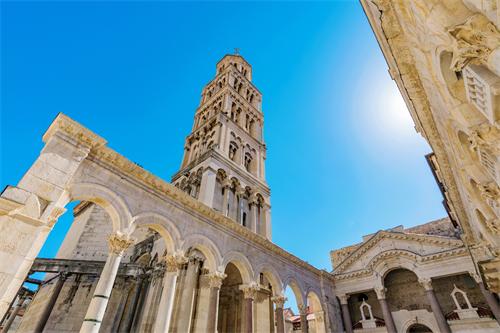
After checking in, I headed straight into Diocletian’s Palace. There is no entrance fee—the palace is an open neighborhood. Wandering its maze-like streets is the best way to absorb the city’s unique atmosphere.
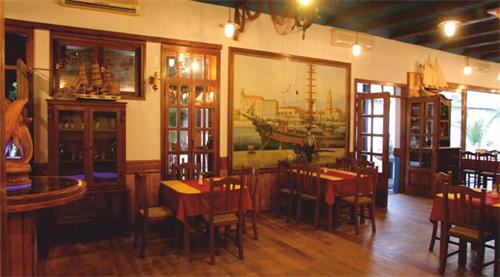
In the evening, I walked to the Riva waterfront promenade, one of the best places to observe local life. A drink by the sea while watching the Adriatic sunset is a simple but essential experience. Dinner at a traditional konoba typically costs €15–25 per person, with dishes like black cuttlefish risotto, grilled fish, or pašticada (slow-cooked beef).
Day 2: History and the Sea
Start early. Before tour groups arrive, Diocletian’s Palace feels almost intimate.
Fans of Game of Thrones will recognize many locations used to depict the city of Meereen. The palace basements served as dungeons and dragon chambers, while the Peristyle Square appeared as a public gathering space in Daenerys Targaryen’s storyline.
Later, purchase the “Purple Ticket” (around €15), which grants access to the Cathedral of Saint Domnius, the bell tower, the Temple of Jupiter, and other sites. Climbing the bell tower offers one of the best panoramic views of the city.
At midday, head toward the Pazar Green Market near the Silver Gate for a casual lunch.
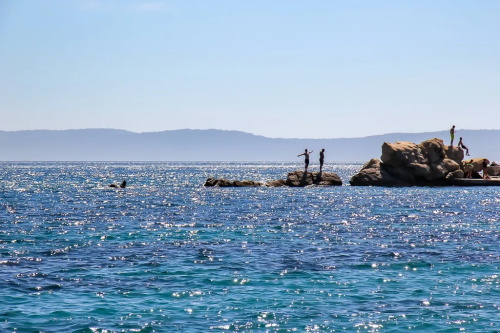
In the afternoon, walk or take a bus to Bačvice Beach, famous for its shallow water and sandy shore—ideal for swimming and relaxation.
Day 3: Island Hopping
This is the highlight for many travelers. Book ferry tickets at least one day in advance.
Popular options include:
- Hvar: lively atmosphere, yachts, nightlife, and the Fortica Fortress viewpoint
- Brač: more tranquil, known for Zlatni Rat beach and water sports
Round-trip ferry tickets generally cost €20–40, depending on speed and operator.
Day 4: Trogir and Marjan Hill
In the morning, take a bus to Trogir, a perfectly preserved medieval town and UNESCO World Heritage Site. Its compact size makes it ideal for a relaxed 2–3 hour visit.
Return to Split in the afternoon, rest briefly, then hike Marjan Hill in the evening. The forested trails lead to viewpoints such as Telegrin Peak, offering a breathtaking sunset over the Old Town, harbor, and surrounding islands. Bring water and wear proper walking shoes.
Day 5: Final Stroll and Departure
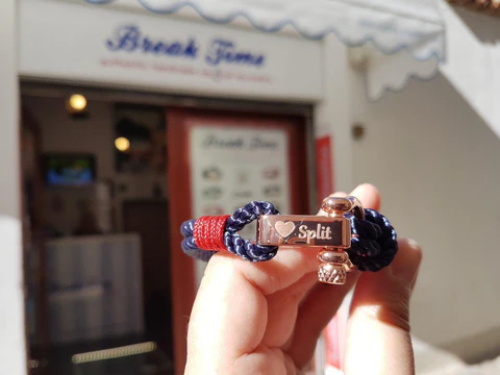
Spend your remaining time wandering the Old Town, buying souvenirs like lavender products or traditional Croatian neckties. Allow at least 2.5 hours before your flight to return to the airport via shuttle bus.
Practical Notes
Croatia uses the euro. Credit cards are widely accepted, but small markets and some guesthouses may require cash. English is spoken fluently in tourist areas, and learning a simple Croatian phrase like Hvala (“thank you”) is always appreciated.
Final Thoughts
For travelers who are short on time, mindful of their budget, and not planning to rent a car, Split is an efficient and welcoming destination. Its highlights are densely concentrated, and the Old Town functions as a seamless center for history, transport, dining, and accommodation.
If you avoid peak summer crowds and accept the unavoidable commercialization that comes with popularity, Split rewards you with a rare combination of historical depth, island access, and Mediterranean lifestyle.
Split is not a city to be rushed through—it is a city to be understood slowly.
And when experienced that way, it fully deserves its place as Dalmatia’s crown jewel.
References
- Croatian National Tourist Board. Dalmatia: History, culture, and coastal lifestyle.
- ICOMOS. (1979). Historical complex of Split with the Palace of Diocletian (UNESCO World Heritage listing). UNESCO World Heritage Centre.
- National Geographic Travel. (2022). Croatia’s Dalmatian Coast: Where history meets the Adriatic. National Geographic Society.

“Hidden Gem” Destinations ?
Why “Hidden Gem” Destinations Often Disappoint in Real Life
How to Avoid the Most Common Travel Letdowns
“Cheap” Destinations?
Why Some “Cheap” Destinations End Up Costing More Than Expected
The main reason is the hidden costs that you never anticipated before arriving.
AI Travel Planner Test
The AI Travel Planner Test: Can ChatGPT Plan a Better Trip to Sardinia Than I Can?
Before I seriously started planning my trip to Sardinia, I was confident in my own abilities.
World Cup in Dallas
Football Pilgrimage 2026: A Fan’s Guide to Surviving and Thriving at the World Cup in Dallas
Watching a World Cup match live is a once-in-a-lifetime item on many football fans’ bucket lists.